About the plant
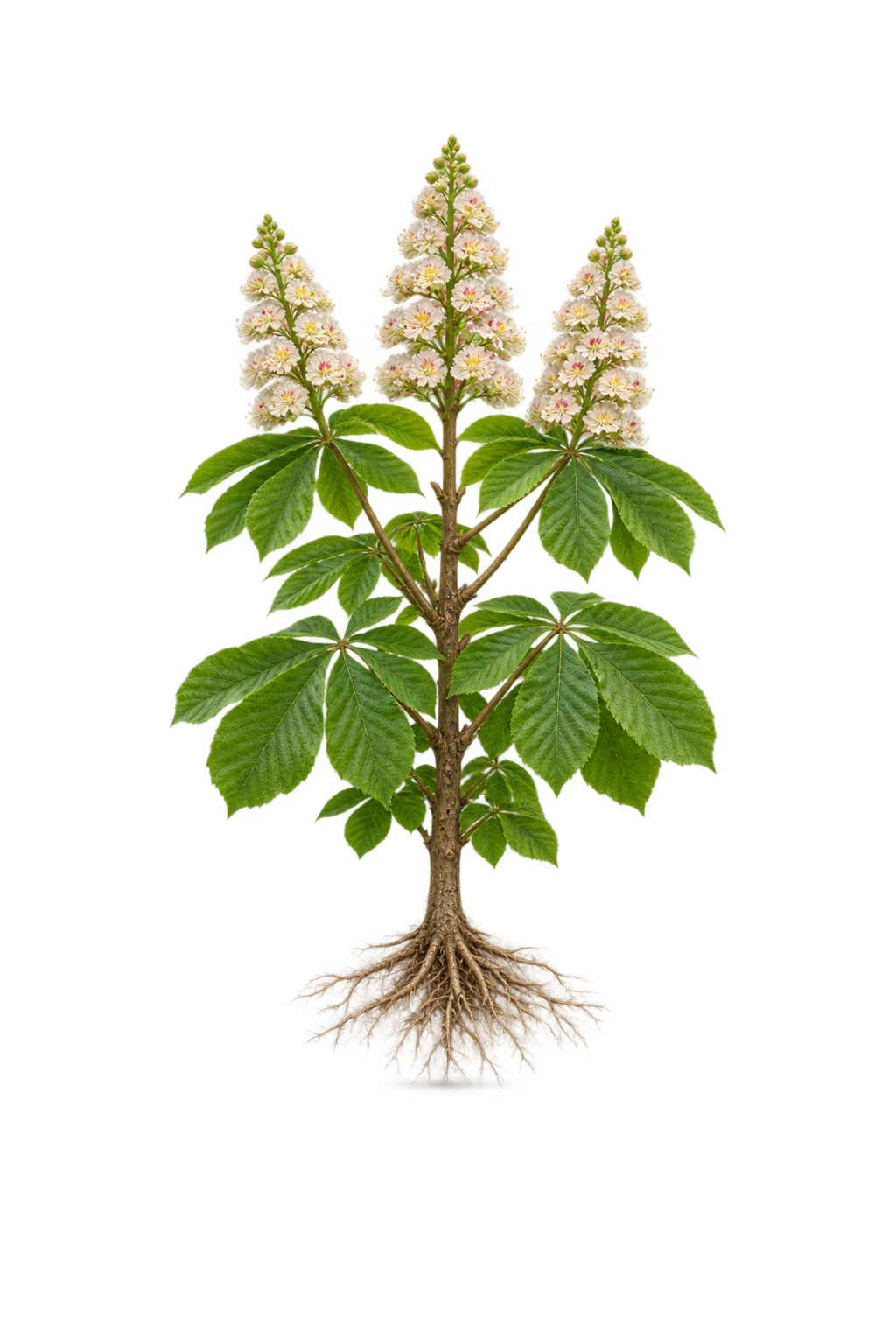
Horse chestnut (Aesculus hippocastanum L.) is a large deciduous tree native to the Balkans. Standardized seed extracts are used in herbal practice, with aescin being the best-known constituent.
Traditional use
Traditionally used to support venous circulation and to reduce sensations of heaviness, fatigue, tension and mild swelling in the legs.
For internal use, only standardized finished products made from horse chestnut seed should be used according to their instructions. It is also used in topical gels and creams.
Natural compounds
Horse chestnut seed contains aescin, flavonoids, coumarins, tannins and other plant compounds.
Interesting facts
Standardized seed extracts are used in herbal practice, with aescin being the best-known constituent.
Horse chestnut seed contains aescin, flavonoids, coumarins, tannins and other plant compounds.
References
-
World Health Organization. (2002). WHO monographs on selected medicinal plants (Vol. 2). Semen Hippocastani, pp. 137–148. WHO.
View source