About the plant
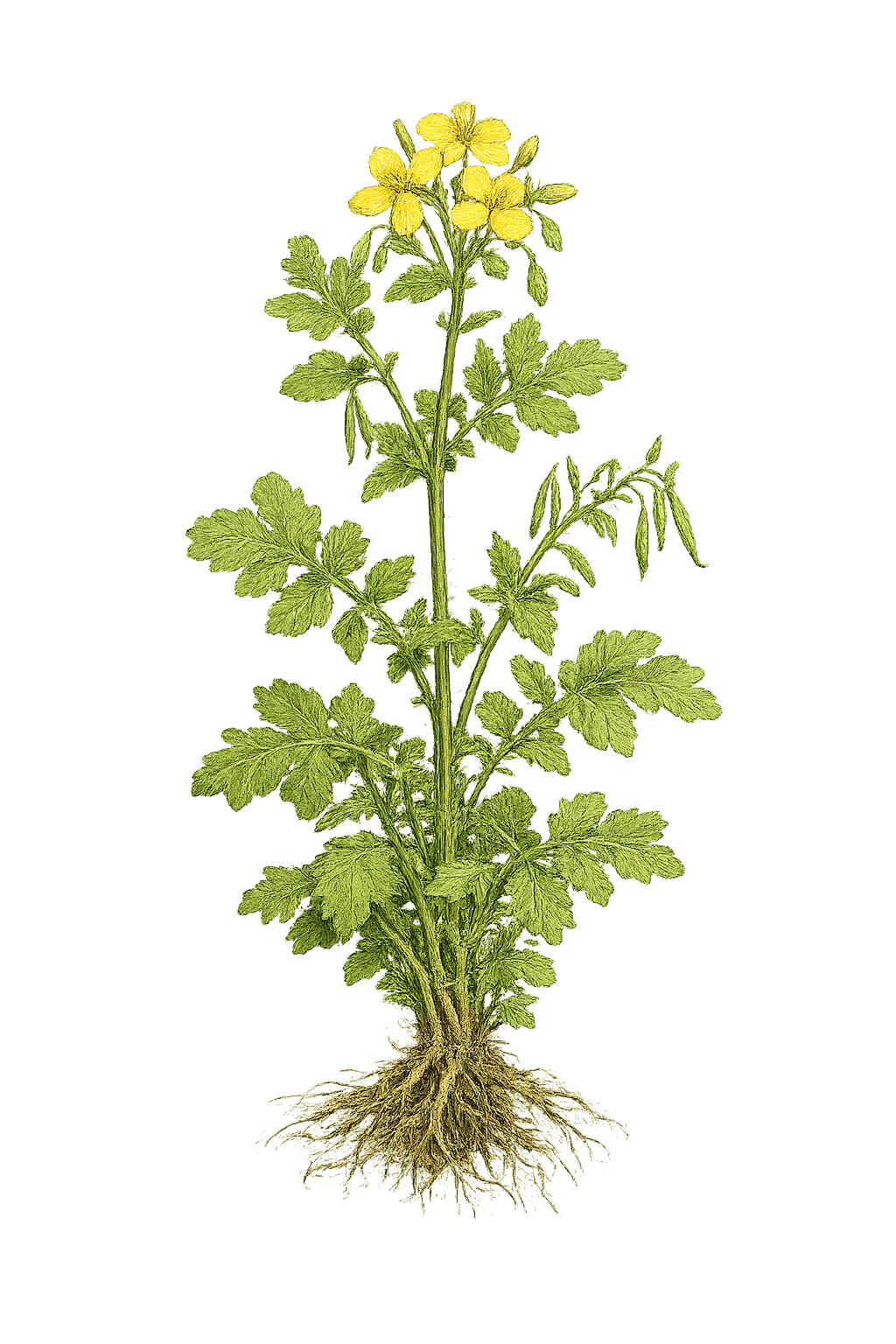
Greater celandine (Chelidonium majus L.) has a long history of traditional use, but internal use is associated with significant safety concerns, including reported cases of liver injury.
Traditional use
Historically used for digestive and biliary complaints and externally in folk practice. Internal use should be limited to controlled, legally authorized products.
Home-made tea or tincture for internal use is not recommended. External use also requires caution because the sap may irritate the skin and eyes.
Natural compounds
Contains isoquinoline alkaloids including chelidonine, sanguinarine and chelerythrine. These compounds have strong biological activity and may be toxic.
Used in our formulations
- Хепато-Микс 3/1
- Hepato-Mix
- Prespa Gorčica 500
Interesting facts
Contains isoquinoline alkaloids including chelidonine, sanguinarine and chelerythrine.
Historically used for digestive and biliary complaints and externally in folk practice.
References
-
World Health Organization. (2010). WHO monographs on medicinal plants commonly used in the Newly Independent States (NIS). Herba Chelidonii, pp. 73–90. WHO.
View source